For the Calcium Calculator™ Mobile App, I led UX research and concept development on a health promotion team at BC Dairy Association, translating user insights into a clear, evidence-based product direction.
As project manager, I lead client relationship with Tactica for design execution, ensuring alignment with user needs, interaction goals, and overall product vision.
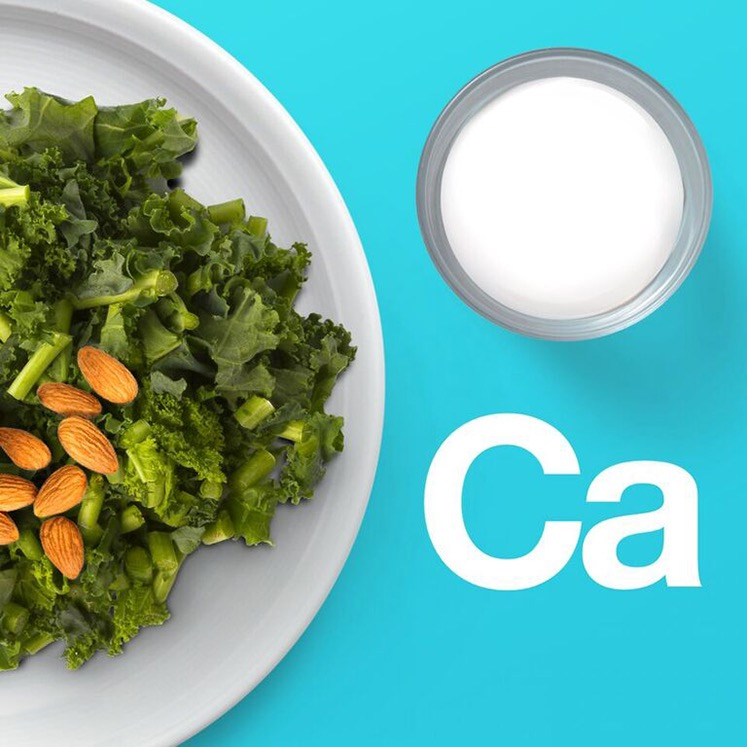
Problem
Many Canadians don’t realize they aren’t getting enough calcium, nor do they know what to do about it.
Challenge
Transform a validated, static nutrition education tool into an interactive mobile experience that not only improves self-assessment accuracy, but also motivates users to take daily action toward meeting their calcium needs.
Solution
The Calcium Calculator™ Mobile App is a fun way to find out how much calcium you get from the foods you eat and to make a plan to eat better.
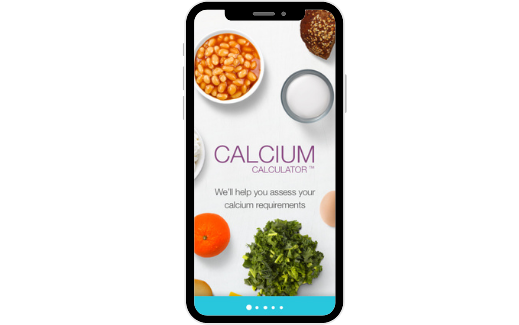
“I would definitely recommend (this app) to my patients and clients… I think having an app that is so user friendly will help them get closer to their goals.” -User Interview #2Research
Upon receiving the project brief, we recognized the complexity of translating a clinically validated, print-based nutrition tool into a mobile experience.
To ensure we held true to the original tool, we deconstructed the challenge into key research goals that evaluated the impact of moving from print to digital format, and identified opportunities to improve accessibility, accuracy, and actionability.
Research Goals
Improve accuracy of calcium intake and self-assessments.
Evaluate relevance of a digital calcium assessment tool.
Establish ongoing engagement.
Drive sustainable behavior change through goal setting.
User Journey
Research Methodologies
User Journey
User Experience
Literature Review
User Experience:
Interviews
2 rounds of user testing.
Ages 34-50.
6 participants.
In-Person and Virtual Interviews
Key Insights:
Overall, the app was very well received and described as “easy to use”, “user friendly”, “educational” and “very straight forward”.
It was not immediately clear that an action plan was the main mechanism to get more calcium.
Opportunity to improve the navigation for viewing more food items or action plans.
Users were split between food photos or illustrations.
User Experience:
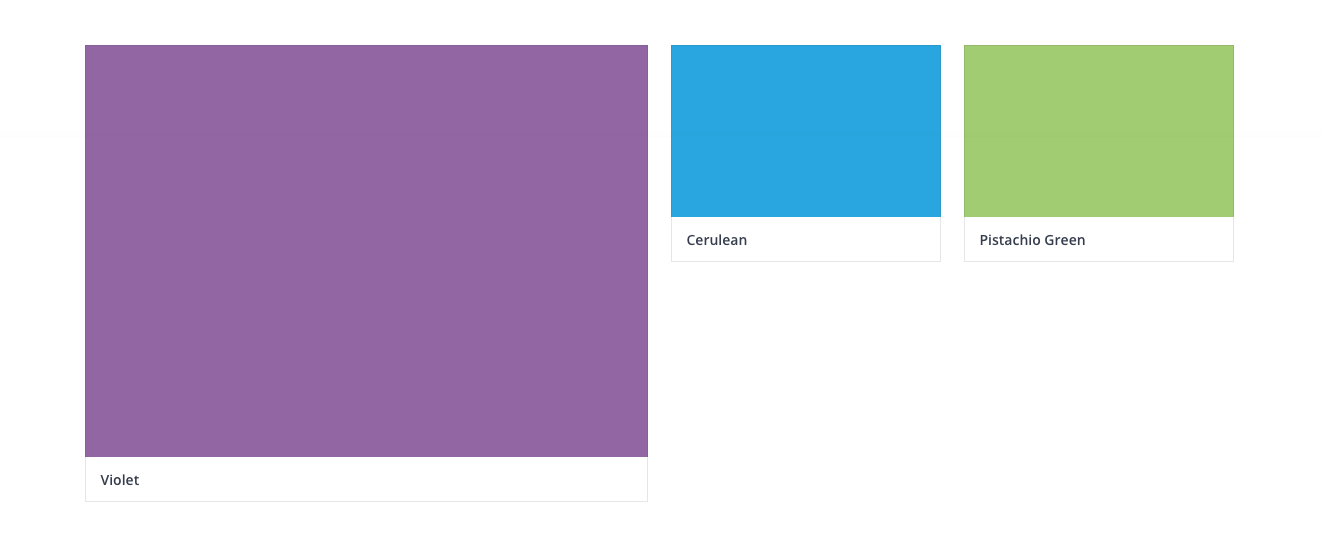
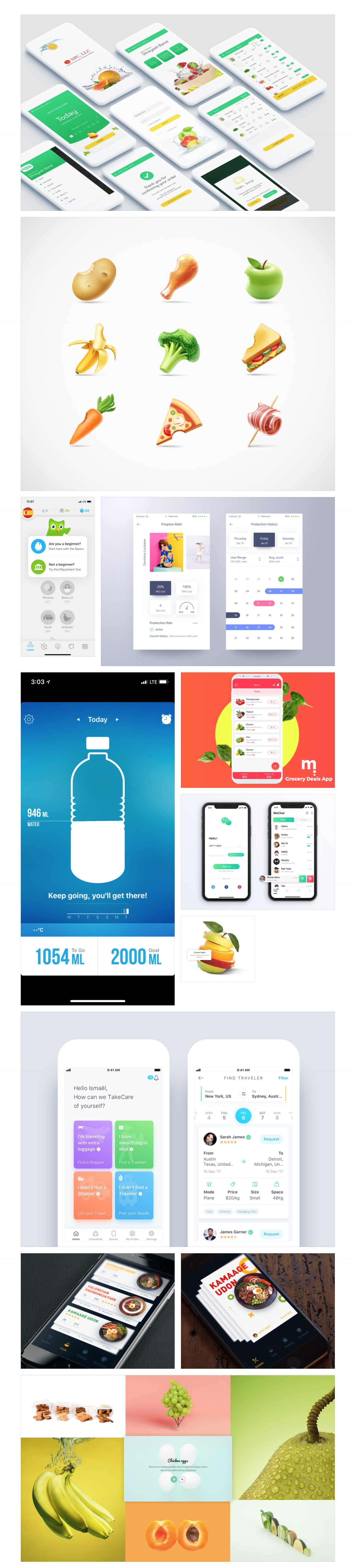
Mood Boards
Key Insights:
Users preferred the color scheme of Mood Board #1.
User Experience:
Wireframes/Lo-Fidelity
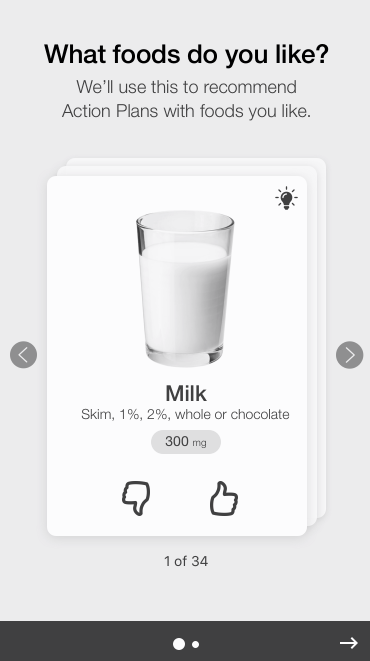
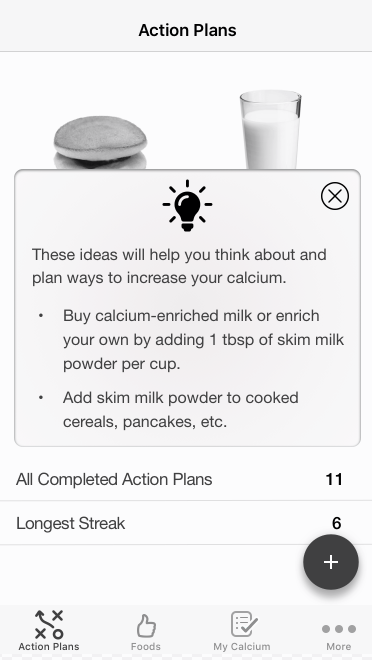
Hi-Fidelity
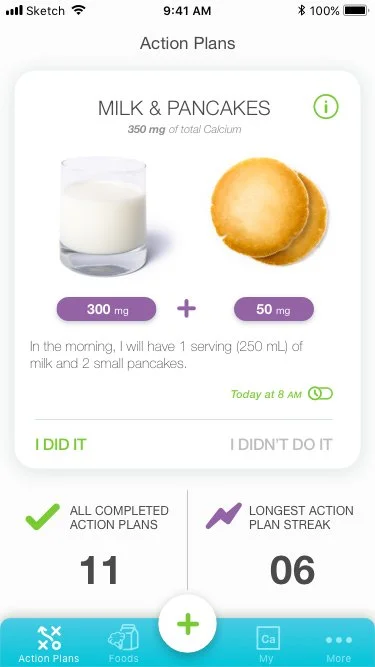
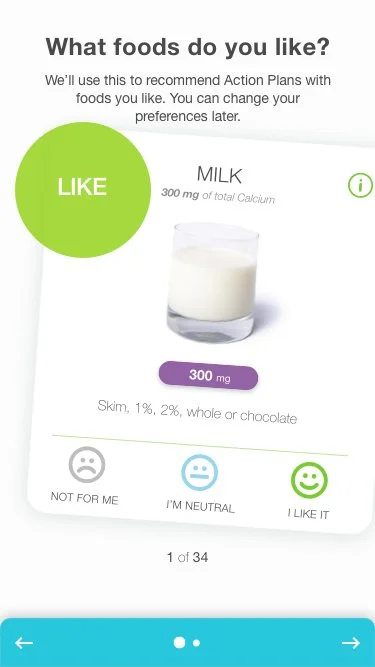
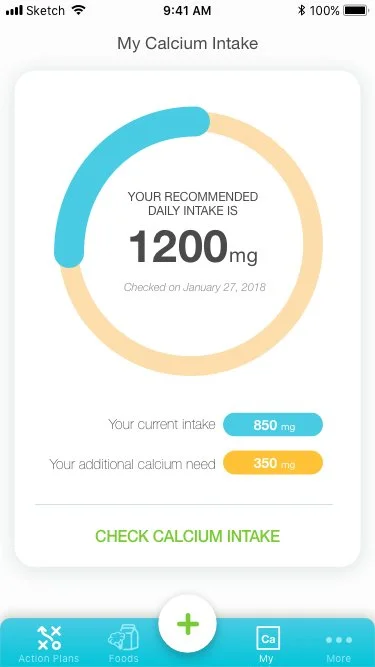
Key Insights:
Add left and right arrows next to the food item or Action Plan.
83% of users had expectations of seeing charts or graphs that tracked the action plans.
Users wanted to see information over a period of time to better understand their progress.
Literature Review
Most Canadians aren’t getting enough calcium.
Based on national data most Canadians have inadequate calcium intake, as high as 86.9% in adult women between 19-50 years.
Apart from the importance of adequate calcium intake alone, this nutrient has been shown to be a reliable predictor of overall diet quality in women. A study of 452 females aged 14 to 86 years consistently found that diets low in calcium were likely to be low in 12 other nutrients.
Health Canada (2012). Do Canadian adults meet their nutrient requirements through food intake alone? Canadian Community Health Survey, Cycle 2.2 Nutrition.
Rafferty, KA, Barger Heaney, J, & Lappe, JM (2011). Dietary calcium intake is a marker for total diet quality in adolescent girls and women across the life cycle. Nutrition Today, 46(5), pp.244-251. doi: 10.1097/NT.0b013e318230e5b5
The Calcium Calculator™ is a nutrition education tool that was validated against a traditional information brochure among 216 women aged 19 – 49. The researchers found that more women who had completed a self-assessment had an accurate assessment of their calcium intake.
Ulmi, S, McGowan, P, Gray, D, & Savoy, D (1999). Moving beyond information: Evaluation of a nutrition education tool based on a theoretical model. European Journal of Clinical Nutrition, 53(2),S49-S53.
1 in 4 women and 1 in 8 men over 50 have osteoporosis.
Launch
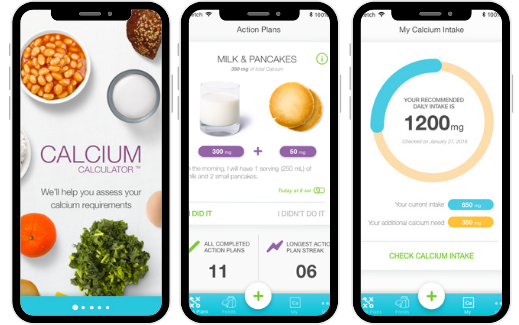
Developed in 2018, the validated Calcium Calculator™ app is designed to help users improve their dietary calcium intake. With over 2,000 downloads, it sure helps you keep your calcium on track.

Acknowledgements
This work was proudly supported by the dairy farmers of British Columbia. Special thanks go to the nutrition education, communications, and marketing teams at BC Dairy Association, and Tactica Interactive for support with research and design.